
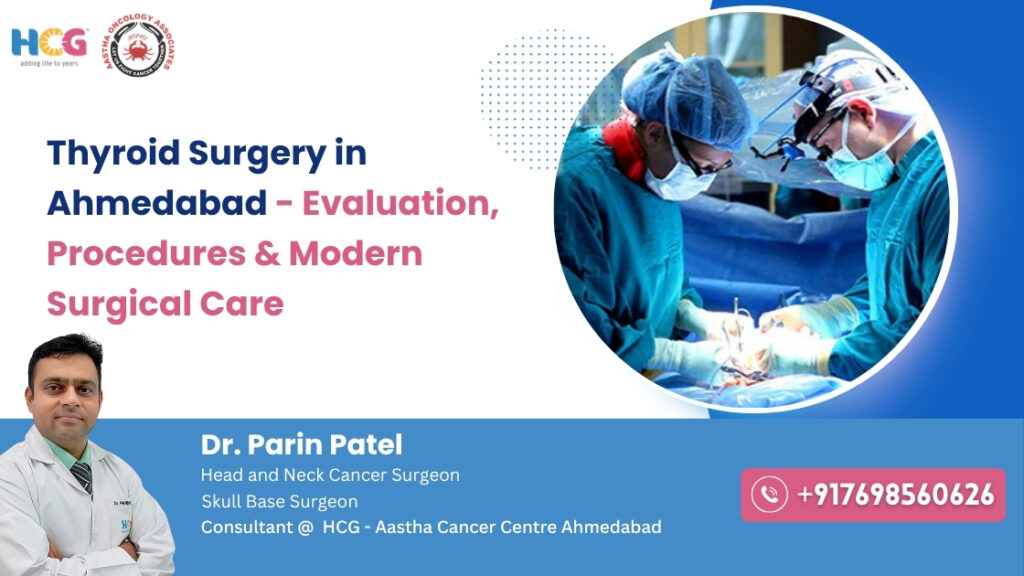
The thyroid is a small, butterfly-shaped gland located at the front of the neck. It produces hormones that influence metabolism, energy use, heart rate, body temperature, and several other functions.Many thyroid conditions can be managed with observation or medication. However, surgery may be recommended in selected cases, particularly when a thyroid nodule is suspicious, a goitre causes pressure symptoms, or cancer is diagnosed.
For patients searching for Thyroid Surgery in Ahmedabad, understanding the evaluation process and available surgical procedures can help them have a more informed discussion with a qualified surgeon.
What Is Thyroid Surgery?
Thyroid surgery, also called thyroidectomy, involves removing part or all of the thyroid gland.The extent of surgery depends on the patient’s condition.
Common procedures include:
- Thyroid lobectomy
- Total thyroidectomy
- Completion thyroidectomy in selected cases
The decision is based on factors such as the thyroid condition, nodule characteristics, biopsy results, cancer risk, symptoms, and overall health.
When Is Thyroid Surgery Recommended?
A surgeon may consider thyroid surgery in several situations.
Suspicious or Confirmed Thyroid Cancer
Surgery is an important treatment for many thyroid cancers.
The exact operation depends on the cancer type, size, location, and whether there is evidence of spread to nearby lymph nodes or other areas.
Suspicious Thyroid Nodules
Most thyroid nodules are not cancerous, but some may have characteristics that require further investigation.
If testing indicates a significant concern, surgery may be recommended.
Large Goitre
A goitre is an enlarged thyroid gland.
A large goitre may sometimes cause:
- Difficulty swallowing
- Pressure in the neck
- Breathing discomfort
- Visible neck enlargement
When symptoms are significant or other clinical concerns exist, surgery may be considered.
Certain Cases of Hyperthyroidism
Some patients with an overactive thyroid may be candidates for surgery depending on the underlying cause, severity, other treatment options, and individual circumstances.
How Are Thyroid Problems Evaluated Before Surgery?
A careful diagnosis is an important part of thyroid treatment.
A specialist may consider the patient’s symptoms, medical history, physical examination, blood tests, imaging, and biopsy results.
Thyroid Blood Tests
Blood tests can provide information about thyroid function.
Depending on the clinical situation, tests may include measurements of thyroid-stimulating hormone and thyroid hormones.
These tests help determine whether the thyroid is functioning normally, underactively, or overactively.
Thyroid Ultrasound
Ultrasound is commonly used to evaluate thyroid nodules.
It can provide information about:
- Nodule size
- Location
- Number of nodules
- Composition
- Shape
- Certain features associated with malignancy risk
Ultrasound findings can help determine whether further evaluation is appropriate.
Why Precision Matters During Thyroid Surgery
The thyroid is located close to several important anatomical structures.
These include:
- Recurrent laryngeal nerves
- Parathyroid glands
- Major blood vessels
- Trachea
- Oesophagus
Careful surgical technique is therefore essential.
The recurrent laryngeal nerves are important for vocal-cord movement, while the parathyroid glands play a major role in regulating calcium levels.
Protecting these structures is an important part of thyroid surgery.
Modern Technology in Thyroid Surgery
Advances in surgical technology have improved visualisation and surgical planning.
Depending on the procedure and clinical setting, surgeons may use:
- High-quality imaging
- Magnified surgical visualisation
- Advanced surgical instruments
- Intraoperative nerve monitoring in selected cases
- Detailed preoperative ultrasound assessment
These tools can assist the surgeon, but they do not eliminate the potential risks of surgery.
The surgeon’s assessment and careful surgical technique remain essential.
What Are the Possible Risks of Thyroid Surgery?
Like any operation, thyroid surgery has potential risks.
Possible complications include:
Bleeding
A collection of blood in the neck after surgery can be serious and requires immediate medical assessment.
Voice Changes
Injury or irritation involving the nerves connected to the vocal cords can cause temporary or, less commonly, permanent voice changes.
Calcium Changes
The parathyroid glands can be affected during thyroid surgery, potentially resulting in low calcium levels.
Infection
As with other surgical procedures, infection is possible but uncommon.
Thyroid Hormone Changes
Patients undergoing total thyroidectomy generally need thyroid hormone replacement.
Patients undergoing lobectomy may or may not require medication depending on their remaining thyroid function.
The risks vary according to the individual patient and procedure.
What Is Recovery Like After Thyroid Surgery?
Recovery can differ depending on the extent of surgery and the patient’s general health.
After the procedure, the medical team may monitor:
- The surgical wound
- Neck swelling
- Calcium levels when appropriate
- Voice-related symptoms
- General recovery
Patients may experience some neck discomfort or temporary stiffness.Follow-up is important because the final pathology report may influence further treatment.Patients should follow their surgeon’s instructions regarding wound care, medication, activity, and follow-up appointments.
Thyroid Surgery for Thyroid Cancer
When thyroid cancer is diagnosed, surgery may form an important part of treatment.
The appropriate operation depends on several factors, including:
- Cancer type
- Tumour size
- Location
- Number of affected areas
- Lymph-node involvement
- Evidence of spread
- Patient-specific considerations
Some patients may require additional treatment after surgery, depending on the pathology and cancer risk.
For this reason, thyroid cancer treatment may involve coordination between surgeons, endocrinologists, radiologists, pathologists, and other specialists.
Modern Thyroid Surgery, Recovery & FAQs
Thyroid surgery has evolved with improvements in diagnostic imaging, surgical instruments, intraoperative monitoring, and preoperative planning. These developments can help surgeons manage selected thyroid conditions with greater precision.
However, the appropriate procedure depends on the patient’s diagnosis, thyroid anatomy, test results, and overall health.
For people searching for Thyroid Surgery in Ahmedabad, understanding modern treatment approaches and postoperative care can help them prepare for a specialist consultation.
Modern Trends in Thyroid Surgery
Better Preoperative Assessment
Modern thyroid care increasingly relies on detailed evaluation before surgery.
Ultrasound can provide important information about thyroid nodules, while blood tests help assess thyroid function. When necessary, fine-needle aspiration can provide cellular information about a suspicious nodule.
This information helps the surgeon determine whether surgery is appropriate and, when surgery is needed, how it should be planned.
Improved Surgical Visualisation
Thyroid surgery requires careful work around delicate structures in the neck.
Modern surgical equipment can provide enhanced visualisation of the operative field, allowing the surgeon to identify important anatomical structures during the procedure.
This is particularly relevant when working near the recurrent laryngeal nerves and parathyroid glands.
Recovery and Follow-Up After Thyroid Surgery
Postoperative care is an important part of thyroid treatment.
Depending on the procedure, follow-up may include monitoring:
- Surgical wound
- Neck swelling
- Voice changes
- Calcium levels
- Thyroid hormone levels
- Pathology results
Patients should follow their surgeon’s instructions regarding medication, wound care, physical activity, and follow-up appointments. If the entire thyroid gland has been removed, thyroid hormone replacement is generally required. After a lobectomy, thyroid function may remain adequate in some patients, while others may need hormone replacement.
Conclusion
Patients looking for Thyroid Surgery in Ahmedabad can consider drparinpatel for specialist consultation and treatment planning.A detailed evaluation can help determine the nature of a thyroid condition, whether surgery is required, and which surgical approach may be appropriate.
Patients should discuss the expected benefits, possible risks, alternatives, medication requirements, and follow-up plan with their treating specialist.
Book a Thyroid Surgery Consultation
If you have a thyroid nodule, enlarged thyroid, suspicious thyroid findings, or a diagnosis requiring surgical evaluation, professional assessment can help determine the appropriate next step.