
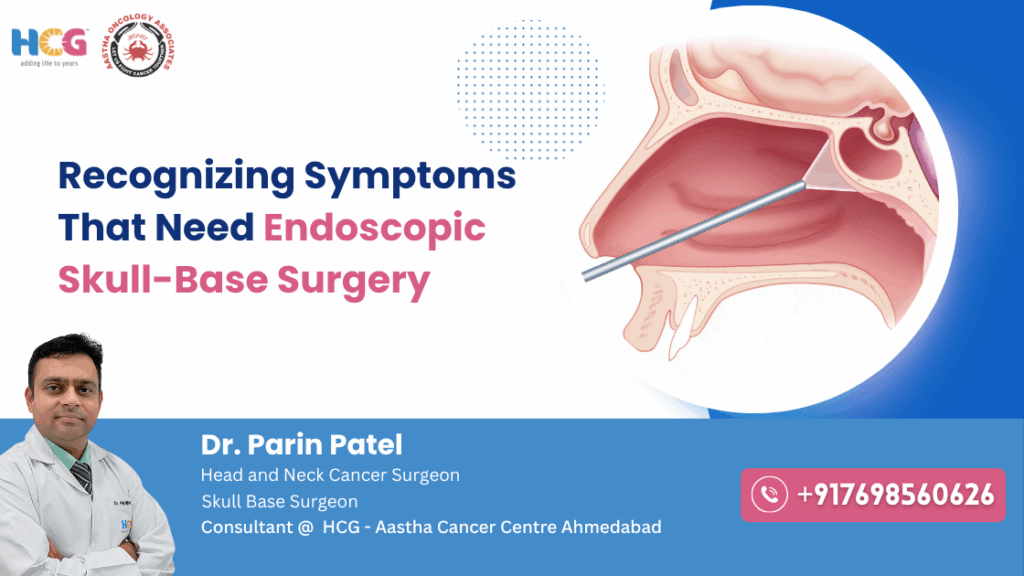
If you’re experiencing persistent headaches, vision changes or nasal symptoms and you live in Ahmedabad, it may be time to consider the possibility of a deeper condition. In this article we look at skull base tumour symptoms, what triggers endoscopic skull-base surgery indications, how minimally invasive skull base surgery works, and why you might want to consult an expert like Dr. Parin Patel-widely recognised among the Best Head and Neck Oncologists in Ahmedabad.
Why early symptom recognition matters?
The base of the skull is a complex region where the brain, nerves, blood vessels and sinus structures meet. Tumours or lesions here can manifest as seemingly minor symptoms. Being aware of skull base tumour symptoms means you can seek timely diagnosis and treatment. Common early signs include:
- Persistent unilateral (one-side) headaches not relieved by usual treatments
- Gradual vision changes: double vision, blurring, loss of peripheral vision
- Nasal obstruction or unusual discharge (especially clear or blood-tinged)
- Hearing or balance changes, ear fullness, or ringing in ears
- Facial numbness or weakness, numbness in the upper jaw region
- Hormonal symptoms (if pituitary involvement): unexplained fatigue, changes in menstruation or libido
Because these signs overlap with more benign conditions (sinusitis, migraines, eye strain), many patients delay evaluation. That’s why understanding “headache and vision changes diagnosis” together is critical: when headaches accompany vision issues, it’s more than routine.
What triggers the decision for “endoscopic skull base surgery”?
When your specialist evaluates imaging scans (MRI/CT) and finds a lesion at the skull base, they will consider whether you meet the endoscopic skull-base surgery indications. Endoscopic approaches—performed through the nasal cavity or via small keyholes—are increasingly preferred for lesions in specific locations. Indications may include:
- Tumour or lesion in the sinonasal region extending into the skull base
- Pituitary adenomas with lateral or cavernous sinus extension
- CSF (cerebrospinal fluid) leak from skull base defect causing recurrent meningitis or drainage
- Tumours of the clivus, sphenoid, or infratemporal fossa accessible via endoscope
- Patients for whom a less invasive approach reduces recovery time, hospital stay and post-op complications
In Ahmedabad, having access to a surgeon with skull-base speciality is key. Dr. Parin Patel at HCG Aastha Cancer Centre, Sola-SG Highway is one such expert, trained in endoscopic and compartmental skull base procedures.
Benefit of minimally invasive skull base surgery
One of the most significant advancements in skull base care is the shift to minimally invasive skull base surgery. Compared to traditional open craniotomy or facial-resection surgeries, the endoscopic route offers:
- Smaller or no external incisions (e.g., through the nose)
- Less pain, fewer complications and shorter hospital stays
- Faster recovery: patients often return to normal activity sooner
- Equivalent (or better) access to deep-seated lesions with modern navigation tools
- Improved quality of life after surgery-important when the tumour is benign or borderline
For Ahmedabad patients, access to skilled teams like those led by Dr. Parin Patel means you’re not just getting surgery-you’re getting care tailored to your lifestyle, environment and local context.
When you should act?
If you’re living in Ahmedabad and experiencing any of the below for more than 2–3 months (especially when vision/headache symptoms co-occur), schedule an evaluation:
- Persistent unilateral headache + any visual change
- Nasal obstruction or discharge unexplained by infection, especially recurring
- Facial numbness/tingling + ear fullness or hearing changes
- Hormonal or pituitary symptoms + imaging shows irregularity
- Prior imaging showing a lesion near the skull base or sinus/skull base junction
Make sure the specialist you see is competent in skull base work—look for “Endoscopic Skull-base Surgery Specialist Ahmedabad” in your search and ask questions such as: “Have you done endoscopic skull-base resections?”, “What is your complication rate?”, “What does my recovery look like?”
Choosing the right specialist in Ahmedabad
In Ahmedabad, Dr. Parin Patel stands out as one of the best head and neck oncologists, particularly for skull base work. He has:
- A dedicated fellowship in skull base surgery and head-neck oncology.
- Experience in both open and endoscopic skull base approaches.
- Multidisciplinary backup for radiology, navigation, neurosurgery, ENT and head-neck rehab.
- Local clinic at HCG Aastha Cancer Centre, Sola-SG Highway with infrastructure suited for complex cases.
When you consult, prepare to bring past imaging, a list of symptoms (even if mild), and ask about the endoscopic route. This ensures you’re discussing your endoscopic skull-base surgery indications and options tailored to you.
Life after surgery: What to expect?
Following surgery, the goal is not just tumour removal but returning to your best life. Recovery may involve:
- Night rest and nasal-care (if endonasal route used)
- Vision check-ups and rehabilitation if nerves were involved
- ENT follow-up for nasal/sinus function
- Regular imaging scans and neuro-ENT checks
- Rehabilitation (speech/swallowing) if the tumour affected those functions
- Lifestyle adjustments: nutrition, hydration, avoiding heavy straining or barotrauma (important in Ahmedabad’s climate and travel context)
Your specialist will outline follow-up, but being an informed patient helps you engage actively in recovery.
Final thoughts
Recognising skull base tumour symptoms, understanding when to consider endoscopic surgery and selecting a skilled endoscopic skull-base surgery specialist in Ahmedabad can make all the difference. If you’re experiencing persistent headaches with vision changes, or nasal/ear/facial symptoms that don’t resolve, act sooner rather than later. Dr. Parin Patel is a trusted name in this field and may be the right consultant for you.