
Craniofacial Surgery
When Skull and Facial Tumours Need Craniofacial Surgery?
A lump on the face, a nose that stays blocked on one side, or swelling near the eye can be confusing. Most of the time the cause is minor. But when the problem sits in the bones of the skull or face, or a tumour grows close to the eye, nose or brain, treatment needs a different level of planning.
A lump on the face, a nose that stays blocked on one side, or swelling near the eye can be confusing. Most of the time the cause is minor. But when the problem sits in the bones of the skull or face, or a tumour grows close to the eye, nose or brain, treatment needs a different level of planning.
This is where craniofacial surgery treatment in Ahmedabad becomes important for tumour patients. In cancer care, craniofacial surgery means removing tumours that involve the skull, facial bones, eye socket or skull base. The surgeon then rebuilds the area so that appearance and function are protected as much as possible.
This guide explains which tumours may need this surgery, which symptoms to watch for, how doctors decide, and what recovery usually looks like.
What Is Craniofacial Surgery in Cancer Care?
Craniofacial surgery deals with the bones and soft tissues of the skull and face. Many people connect it with accidents or birth conditions. If you want to read about injury-related repair, we have a separate blog on whether craniofacial surgery can restore facial symmetry after trauma.
In oncology, the focus is different. The surgeon's first job is to remove the tumour completely, including any bone it has grown into. The second job is to rebuild the area and protect vision, breathing, speech, chewing and swallowing.
This work sits within head and neck surgical oncology. The skull, brain, eyes and sinuses are very close together here, so the surgery needs careful scans, planning and often more than one specialist.
This article is about tumour-related surgery. Birth-related problems such as cleft lip or skull shape changes in infants are usually handled by separate paediatric teams.
Which Tumours May Need Craniofacial Surgery?
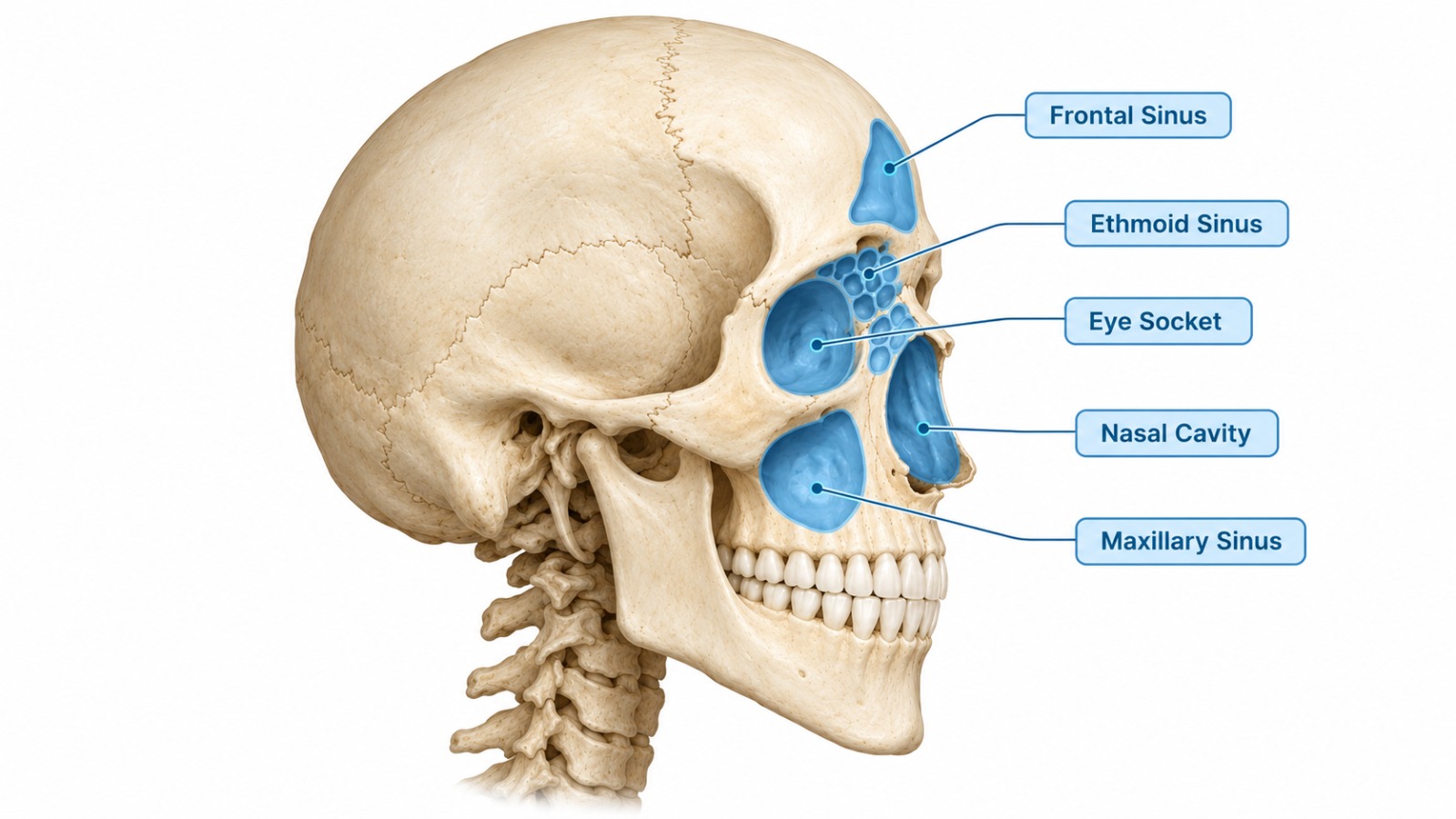
Not every tumour in this area needs this approach. It is usually considered when a tumour has reached bone or sits near delicate structures. Here are the common examples.
| Condition | Where it grows | Why craniofacial surgery may be needed |
|---|---|---|
| Sinus and nasal cavity cancer | Nose and sinuses | Tumour may reach the thin bone near the brain or eye socket |
| Skull base tumour | Underside of the skull | Close to nerves, blood vessels and brain |
| Orbital tumour | Eye socket | Needs removal while protecting vision and eye movement |
| Jaw and facial bone tumour | Upper jaw, lower jaw, cheekbone | Bone removal and rebuilding are needed to restore bite and shape |
| Skin cancer that invades bone | Scalp, forehead, face | Cancer has gone deeper than the skin |
| Recurrent head and neck cancer | Site of earlier treatment | Scar tissue makes surgery more complex |
| Skull or facial bone tumour | Bones of the skull or face | Tumour removal followed by bone reconstruction |
Some of these tumours are not cancer but still need surgery, because they press on nerves or slowly change the shape of the face. If you want to know more about sinus-related tumours, see our pages on paranasal cancer and sinus cancer specialist care in Ahmedabad.
Warning Signs You Should Not Ignore
Early symptoms are often mistaken for a sinus infection, allergy or dental problem. Please see a doctor if any of these last more than two to three weeks:
- A blocked nose on one side that does not improve, or repeated one-sided nosebleeds
- A lump or swelling on the cheek, forehead, jaw or scalp
- Numbness, tingling or pain in one part of the face
- Double vision, a bulging eye, or constant watering from one eye
- Loose teeth or ill-fitting dentures with no clear dental cause
- A sore on the face or scalp that does not heal
- A headache that keeps getting worse, along with any of the signs above
- Reduced sense of smell or discharge from only one nostril
These signs do not always mean cancer. But a one-sided problem that keeps getting worse deserves a proper scan. Our blog on symptoms that need endoscopic skull base surgery explains similar warning signs in more detail.
How Doctors Decide If You Need Craniofacial Surgery
Scans and Imaging
A CT scan shows the bone clearly, while an MRI shows soft tissue, nerves and the brain. Sometimes a PET-CT is added. Together, these scans show how far the tumour has spread and which structures are close to it.
Biopsy and Tumour Testing
A small tissue sample confirms the tumour type. This matters because some tumours respond well to radiation or chemotherapy, and surgery is not always the first step. Tumour testing can also guide treatment, as we explain in how genetics shapes sinus cancer treatment.
Team Discussion
Complex cases are usually reviewed by a team that may include the surgeon, radiologist, pathologist, radiation oncologist and medical oncologist. The final plan could be surgery alone, or surgery combined with radiation or chemotherapy. At Dr. Parin Patel's practice at HCG Aastha Cancer Centre, this kind of team-based planning is a regular part of managing complex head and neck cases.
Open, Endoscopic or Combined Approach?
There is no single method that suits everyone. The right approach depends on where the tumour is, how big it is and what it touches.
| Approach | How it works | Usually considered for |
|---|---|---|
| Endoscopic | Camera and instruments pass through the nose, with no cut on the face | Selected tumours of the sinuses and skull base that can be reached safely this way |
| Open craniofacial | Incision on the face or scalp to reach the tumour and bone | Larger tumours, or those involving the eye socket, forehead bone or a wide area of the skull base |
| Combined | Endoscopic and open methods used together | Tumours that need wide access and a clear view |
A less invasive method is not always the better one. The main goal is to remove the tumour safely and completely. You can read more about the endoscopic route on our endoscopic skull base surgery page, and about healing time in how long recovery takes after endoscopic skull base surgery.
Rebuilding After Tumour Removal
When bone or tissue is removed, the area often needs to be rebuilt. This is planned before surgery, not after. Options may include:
- Titanium plates or mesh to support or replace missing bone
- Tissue from your own body, called a flap, to cover and fill the gap. It may be taken from the forearm, thigh or scalp
- Facial prosthesis or dental rehabilitation in selected cases, to restore appearance and chewing
The aim is to protect function first and appearance next, and to give the best result that is safely possible. To understand this part of care better, read about reconstructive surgery and what a reconstructive surgery specialist actually does.
Risks and Recovery: What to Expect
Every major surgery carries risks. Depending on the tumour location, these may include infection, bleeding, wound healing problems, swelling, changes in sensation, or, less commonly, problems with vision, nerves or fluid leak around the brain. Your surgeon should explain these clearly before you agree to surgery.
Recovery looks different for each person, but it usually follows this pattern:
- A hospital stay for monitoring, pain control and wound care
- Swelling and tiredness for the first few weeks
- Regular follow-up visits and scans
- Speech, swallowing or physical therapy if needed
- Time to adjust emotionally, especially if your appearance has changed
Rehabilitation is a big part of getting back to normal life. Our guide on head and neck cancer rehabilitation explains how this works. Family support also makes a real difference during this period.
What to Look For in Craniofacial Surgery Treatment in Ahmedabad
If you are searching for craniofacial surgery treatment in Ahmedabad, these points can help you compare your options.
| What to check | Why it matters |
|---|---|
| Training in head and neck oncology | Tumours here need a cancer-first approach |
| Skull base experience | The skull base is close to the brain, nerves and major blood vessels |
| Imaging and navigation support | Better planning and a safer surgery |
| Cancer team in the same centre | Radiation, chemotherapy and rehab can be coordinated |
| Clear reconstruction plan | Function and appearance are planned before surgery |
| Honest talk about risks | You can make an informed decision |
Dr. Parin Patel is a head, neck and skull base surgical oncologist at HCG Aastha Cancer Centre, Sola, Ahmedabad. He completed a skull base surgery fellowship at Tata Memorial Centre, Mumbai. You can read more about his work on the page for a head and neck cancer surgeon in Ahmedabad.
Patients travel from other parts of India for complex head and neck care. If you plan to do the same, keep all your scans, biopsy reports and treatment papers together before your visit. It saves time and helps the doctor give clearer advice.
When to Book a Consultation
Please do not wait if you have a swelling, one-sided nasal block, eye change or facial numbness that has not settled in a few weeks. An early scan can give you clarity, even when the cause turns out to be harmless.
To discuss your case with Dr. Parin Patel, call +91 76985 60626 or book a consultation. Carry your previous reports so the first visit can be as useful as possible.
Frequently Asked Questions
What is craniofacial surgery used for in cancer treatment?
It is used to remove tumours that involve the skull, facial bones, eye socket or skull base, and to rebuild the area afterwards so that function and appearance are protected.
Is craniofacial surgery only for cosmetic or birth-related problems?
No. It is also used for tumours and for repair after injury. In cancer care, the main goal is safe and complete tumour removal.
How long is recovery after craniofacial surgery?
It depends on the tumour location, the type of surgery and your general health. Most people stay in the hospital for some days and need several weeks to recover. Your surgeon can give an estimate for your case.
Will my face look different after surgery?
It can, depending on how much bone or tissue needs to be removed. Reconstruction is planned to restore shape and function as far as possible, and your surgeon should discuss expected changes with you beforehand.
Can I consult from another city before travelling to Ahmedabad?
You can call or message the clinic to ask how to share your reports before the visit. This helps you know what tests to carry and how long to plan for.
Does a facial swelling always mean a tumour?
No. Infections, dental problems and glands can also cause swelling. But swelling that keeps growing or does not settle should be checked.
Final Thoughts
Craniofacial surgery for tumours is complex, but with the right scans, a clear plan and a skilled team, it can be done with a strong focus on safety and quality of life. If something in your face, nose, eye or skull area does not feel right, get it examined early. A timely consultation with Dr. Parin Patel's team can help you understand your options, and it is always easier to act early than to wait.
This article provides general medical education and does not replace an individual examination or treatment recommendation.